2028 Toyota Highlander Specs, Price Interior – The 2028 Toyota Highlander could represent an important step forward for one of Toyota’s most recognizable three-row family SUVs. Known for its comfortable ride, practical interior, dependable engineering, and efficient hybrid technology, the Highlander has built a strong reputation among families looking for an alternative to larger, less economical SUVs. As competition becomes increasingly focused on electrification, advanced driver assistance, and sophisticated cabin technology, Toyota has an opportunity to make the next Highlander more modern without sacrificing the everyday practicality that has made it popular.
The upcoming 2028 Toyota Highlander is expected to attract attention with potential exterior refinements, a more advanced infotainment system, improved passenger comfort, and further development of Toyota’s hybrid technology. A redesigned or significantly updated model could also bring changes to its powertrain lineup, depending on Toyota’s long-term strategy for the nameplate. However, Toyota has not confirmed the complete 2028 model specifications, so anticipated features, pricing, and launch dates should be treated as projections rather than official announcements.
For buyers comparing family SUVs, the Highlander occupies an interesting position between compact crossovers and larger body-on-frame vehicles. It offers three-row flexibility without the considerable exterior dimensions of a full-size SUV, making it suitable for school transportation, commuting, shopping, and long-distance family travel. Its hybrid configuration is particularly appealing to drivers who want better fuel efficiency without moving entirely to an electric vehicle. The 2028 model could strengthen this position through a more refined driving experience and technology designed around the needs of modern families. 2028 Toyota Highlander Specs
2028 Toyota Highlander Redesign and Update Plan
Exterior & Interior
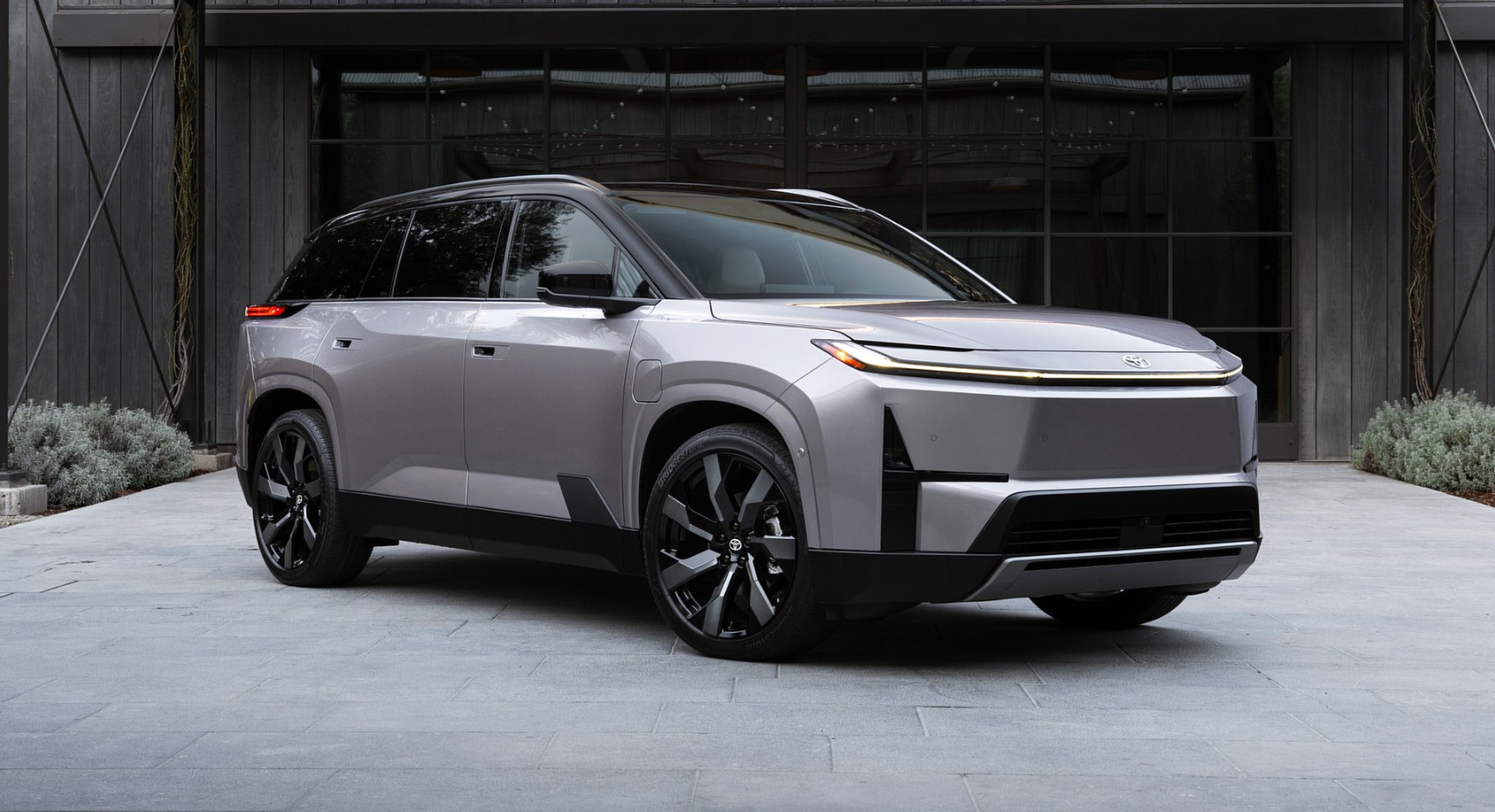
The 2028 Toyota Highlander introduces a much bigger transformation than a conventional mid-cycle refresh. Toyota has officially revealed an entirely new fifth-generation Highlander, replacing the previous generation’s gasoline and hybrid-focused approach with a fully battery-electric platform. This change gives the SUV a different identity in the competitive three-row market. Rather than simply updating its grille, headlights, and interior materials, Toyota has reworked the vehicle’s proportions, aerodynamic characteristics, and underlying architecture to accommodate a high-capacity battery. The result is a more modern SUV designed around electric mobility while retaining the family-oriented practicality associated with the Highlander name.
The redesigned front end features a clean, futuristic appearance with a wide lighting signature and a more sculpted body. Full-width LED daytime running lights create a distinctive visual identity, while the broad front fenders give the vehicle a stronger road presence. The conventional styling elements associated with a gasoline-powered SUV have been replaced by a smoother, more aerodynamic design. Semi-flush electronic door handles contribute to the streamlined appearance, helping reduce unnecessary visual complexity. Toyota’s designers have also emphasized airflow management through carefully shaped body panels and underbody aerodynamic components. These details support the electric powertrain’s efficiency goals while giving the new Highlander a sophisticated appearance.
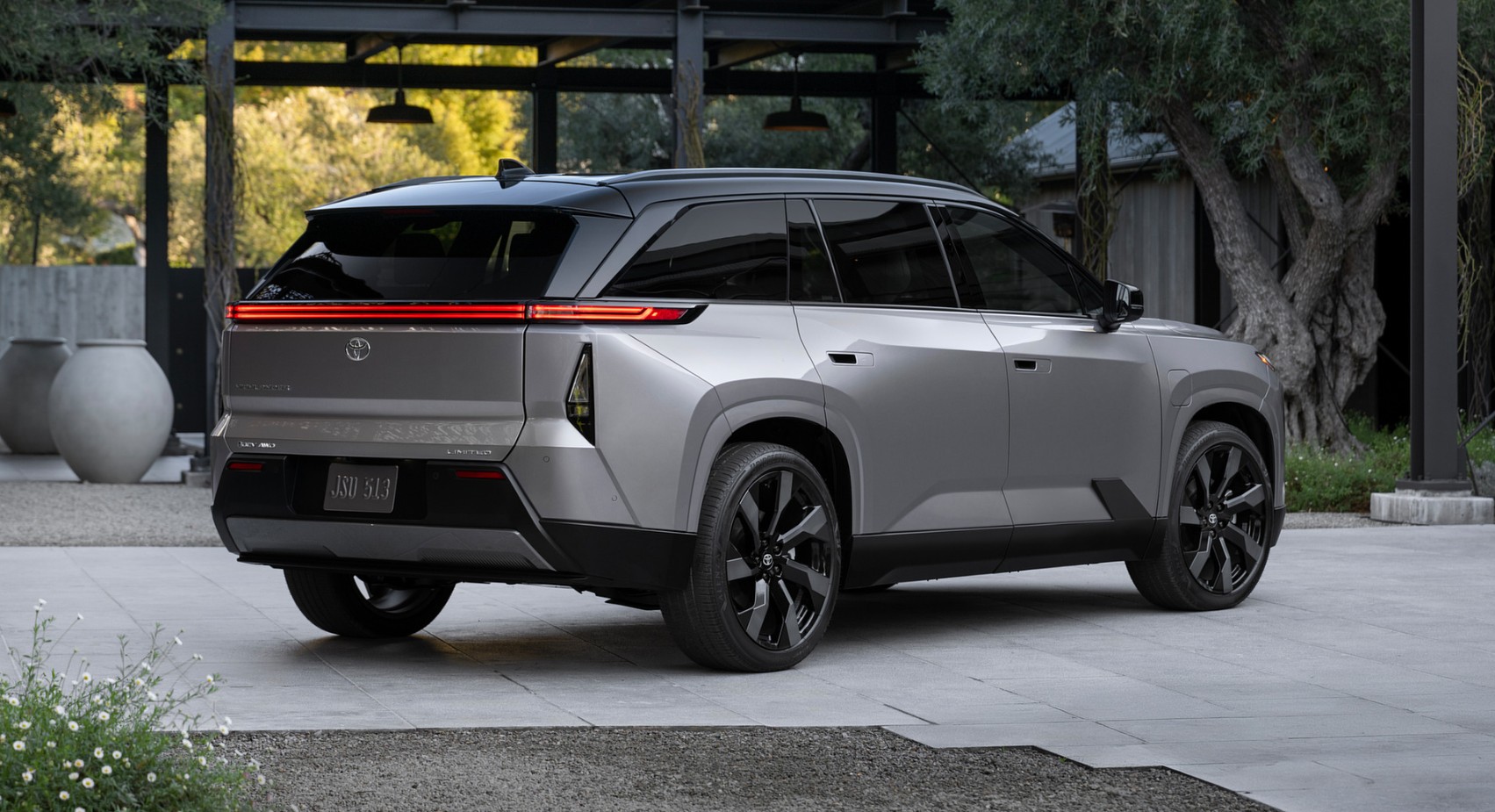
The side profile reveals a significant change in the SUV’s proportions. The 2028 Highlander measures approximately 198.8 inches long, 78.3 inches wide, and 67.3 inches tall, with a wheelbase of 120.1 inches. Compared with its predecessor, the new model has a longer wheelbase and wider body, while its overall height is lower. This combination creates a planted stance and gives the designers additional opportunities to optimize interior packaging. The wheels are positioned closer to the corners, producing a balanced appearance and helping maximize the available passenger compartment. Depending on grade, Toyota will offer different alloy-wheel designs, including larger 22-inch wheels on selected premium configurations.
At the rear, the new Highlander continues the modern styling theme with carefully integrated lighting, a sculpted tailgate, and a broad bumper design. The overall appearance is more streamlined than that of the previous generation, giving the vehicle a premium crossover character rather than the traditional appearance of a conventional family SUV. Toyota’s focus on aerodynamic efficiency extends to the underbody, where protective covers and airflow-management components help reduce turbulence. These refinements are important for an electric vehicle because aerodynamic resistance can directly affect driving range, especially at highway speeds. The combination of broad proportions, contemporary lighting, and smoother body surfaces gives the 2028 Highlander a noticeably different personality.
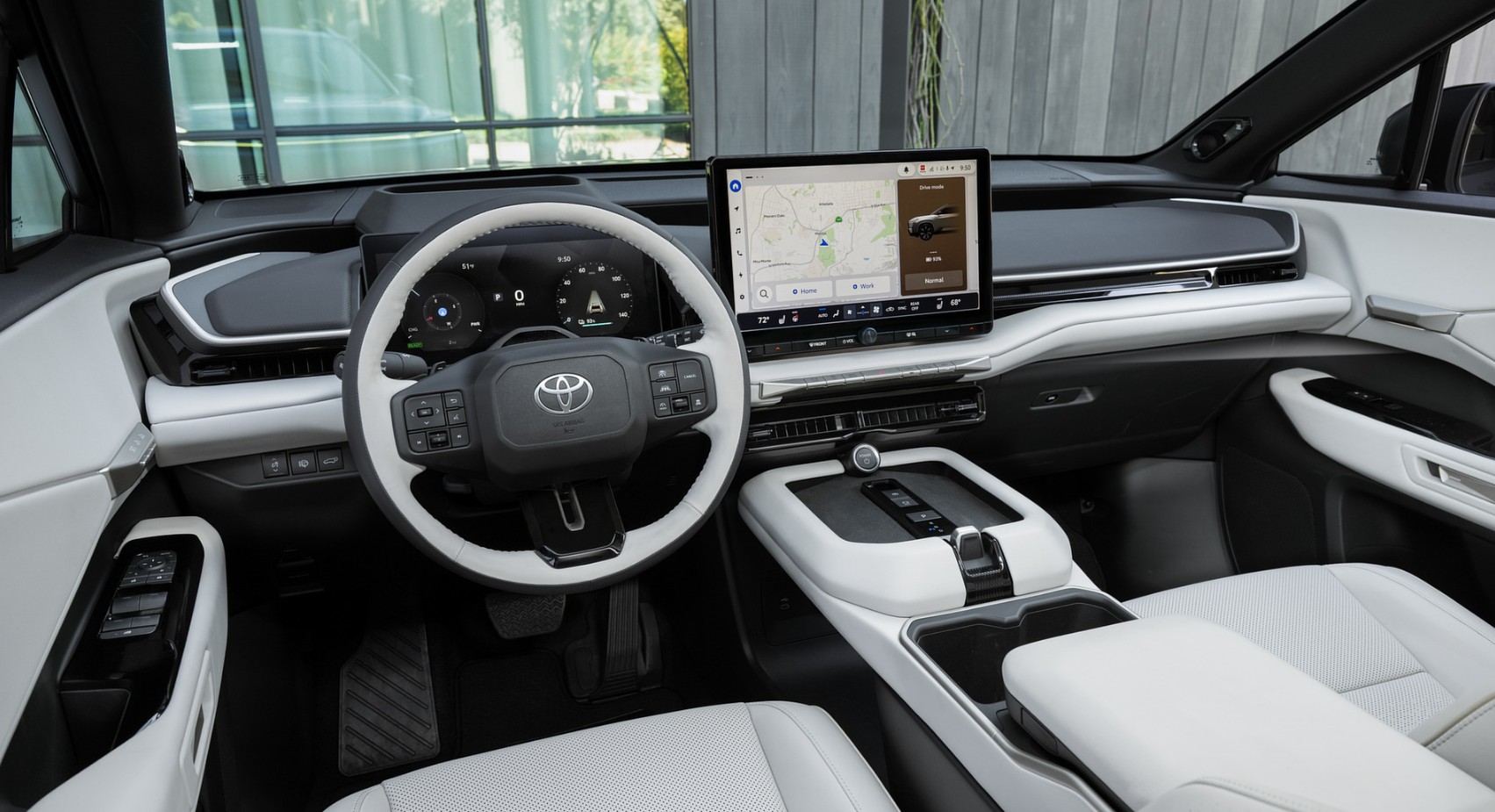
The interior of the 2028 Toyota Highlander has been redesigned around a more technology-focused driving experience. Toyota has created a cleaner dashboard layout with a large central touchscreen and a separate digital instrument display. A standard 14-inch Toyota Audio Multimedia touchscreen provides access to navigation, entertainment, smartphone connectivity, and vehicle settings. The driver also receives a 12.3-inch digital display that presents important information in a clear format. This arrangement reduces dependence on traditional dashboard controls while keeping frequently used functions accessible. The redesigned cockpit gives the Highlander a more contemporary atmosphere and reflects the technological expectations of customers shopping for a modern electric family SUV.
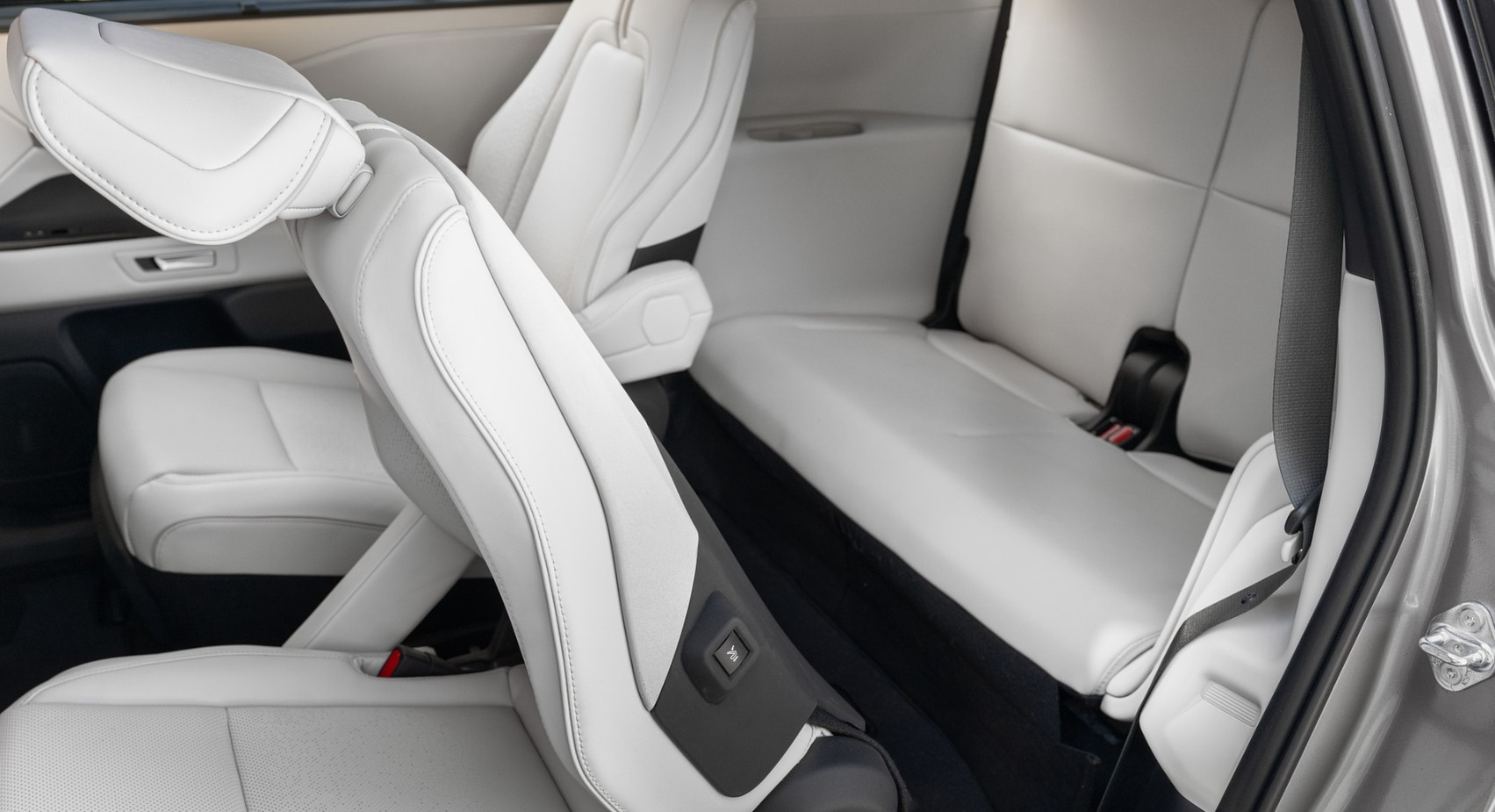
Passenger comfort remains central to the vehicle’s design. The new Highlander provides three-row seating for up to seven occupants when equipped with the available second-row bench configuration. Toyota has used SofTex-trimmed seating surfaces as standard equipment, together with soft-touch materials on the dashboard and door panels. Customizable ambient lighting allows occupants to adjust the cabin atmosphere, while the available fixed-glass panoramic roof brings additional natural light into the passenger compartment. Toyota describes this panoramic roof as the largest in its vehicle lineup. Heated front seats are standard, while ventilated front seats and heated second-row seating are available on selected configurations.
The second and third rows are especially important in a family-oriented vehicle because passenger access and seating flexibility can determine whether an SUV works comfortably for everyday use. The 2028 Highlander offers an available second-row bench seat for buyers who need maximum seating capacity, while captain’s chairs provide a more individual seating arrangement. With the bench configuration, the vehicle accommodates up to seven passengers. Toyota has also increased the wheelbase to improve the cabin’s packaging, creating more room for passengers and helping maintain a practical three-row layout. Additional charging connections throughout the cabin should make it easier for families to keep smartphones, tablets, and other electronic devices powered during extended journeys.
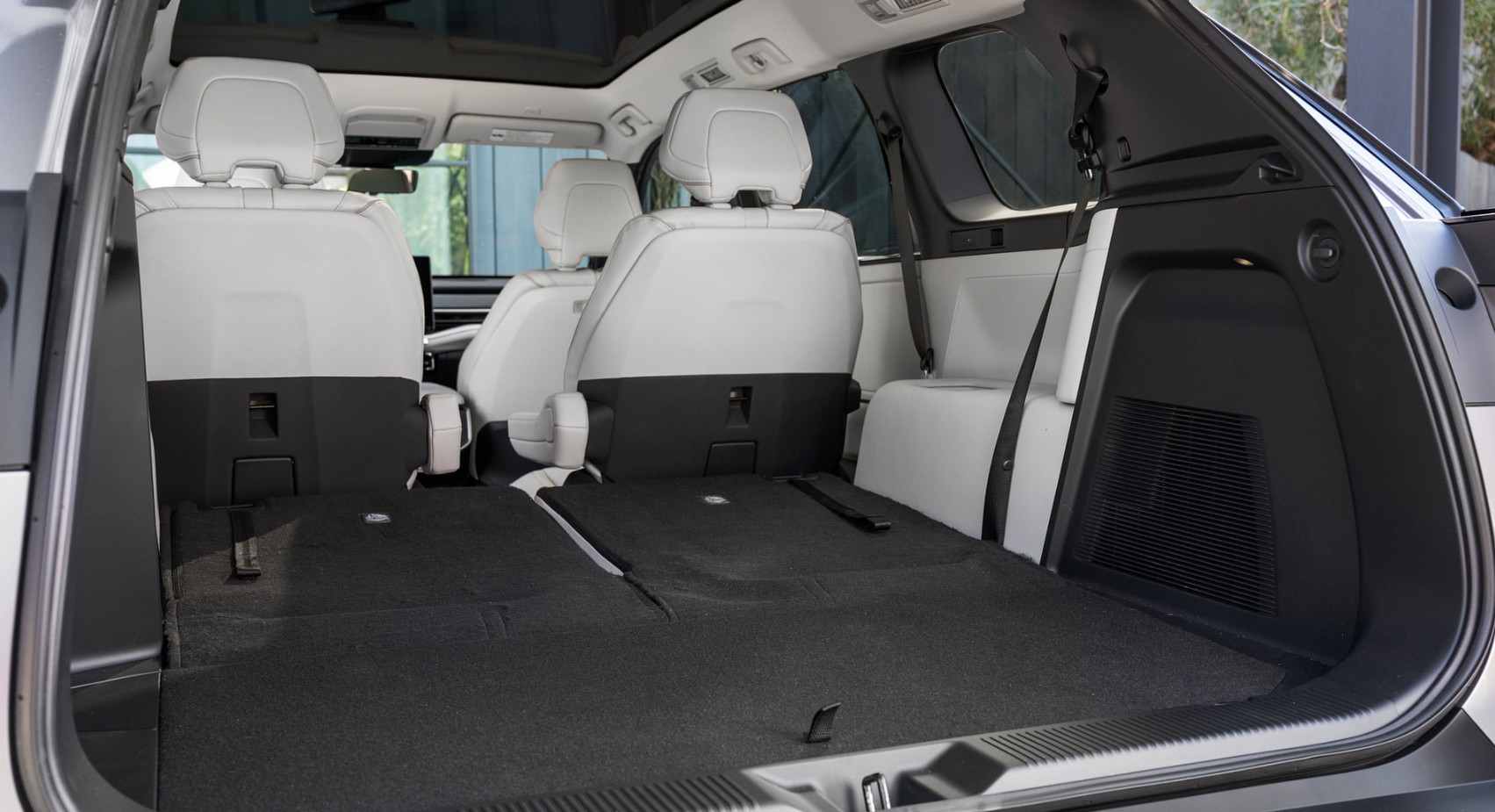
Cargo flexibility is another important part of the redesigned interior. Toyota reports approximately 15.9 cubic feet of storage behind the third row and 45.6 cubic feet when the third-row seats are folded flat, based on its U.S. specifications. These figures make the Highlander suitable for everyday luggage, shopping bags, school equipment, and weekend travel accessories. The electric architecture also gives Toyota opportunities to organize cabin storage differently from a traditional combustion-powered vehicle. A more open dashboard design, practical storage compartments, and convenient device-charging locations help make the cabin easier to use. For families who regularly travel with several passengers, the combination of three-row seating and flexible cargo space remains one of the model’s most important advantages. 2028 Toyota Highlander Specs
2028 Toyota Highlander Specs
Engine & Performance
The most significant mechanical change for the 2028 Toyota Highlander is its transition to a fully battery-electric powertrain. Unlike the previous generation, which offered gasoline and hybrid engines, the new Highlander is designed exclusively as a battery electric vehicle for the U.S. market. Toyota offers different battery and drivetrain configurations depending on grade. The XLE is available with front-wheel drive or all-wheel drive, while the Limited comes with all-wheel drive and a larger battery as standard. This strategy gives customers a choice between a more affordable configuration and a higher-performance version with additional driving range and traction capability.
The front-wheel-drive XLE uses a 77.0-kWh battery and produces 221 horsepower with 198 lb-ft of torque. This configuration is designed for buyers who primarily drive on paved roads and want an efficient three-row electric SUV for daily transportation. The all-wheel-drive versions use electric motors at both axles, producing a combined 338 horsepower and 198 lb-ft of front-motor torque alongside 125 lb-ft of rear-motor torque. The additional rear motor provides improved traction and more immediate power delivery. Electric motors can deliver substantial torque without waiting for engine revolutions to build, giving the Highlander a responsive character during acceleration and highway merging.
Battery capacity is another important consideration because it determines the vehicle’s energy storage and contributes to its estimated driving range. The 77.0-kWh battery is standard on the XLE FWD and available on the XLE AWD, while a larger 95.8-kWh battery is offered on the XLE AWD and comes standard on the Limited AWD. Toyota’s manufacturer-estimated driving range reaches approximately 287 miles for the XLE FWD with the 77.0-kWh battery, 270 miles for the XLE AWD with the smaller battery, and 315 miles for the XLE AWD and Limited AWD equipped with the larger battery. These figures are estimates rather than guaranteed real-world results, as temperature, road conditions, speed, passenger loads, and driving habits can affect actual range.
The electric drivetrain also changes the Highlander’s driving character. Without a conventional combustion engine, the vehicle can provide smoother acceleration and a quieter cabin, particularly during urban driving. The AWD versions add Multi-Terrain Select and Crawl Control, giving drivers additional assistance when traveling across challenging surfaces. These systems help manage motor output and traction according to driving conditions. The electric architecture also allows Toyota to integrate regenerative braking, which converts some kinetic energy into electrical energy during deceleration. This helps recover energy that would otherwise be lost as heat through conventional braking. The final driving experience should combine responsive acceleration, controlled handling, and the smooth operation expected from a modern electric SUV.
2028 Toyota Highlander Fuel Economy
Fuel efficiency is one of the major reasons the 2028 Toyota Highlander could appeal to customers considering a three-row electric SUV. Because the vehicle uses a battery-electric powertrain, traditional gasoline fuel-economy ratings in miles per gallon do not apply. Instead, buyers will need to evaluate battery capacity, estimated driving range, electricity consumption, and charging costs. The larger 95.8-kWh battery provides an estimated range of up to 315 miles in the XLE AWD and Limited AWD configurations. The smaller 77.0-kWh battery delivers up to 287 miles in the XLE FWD and approximately 270 miles in the XLE AWD. Actual efficiency will depend on driving speed, outside temperature, tire selection, terrain, and climate-control usage. Official EPA energy-consumption ratings and MPGe figures should be checked when the final certification data becomes available. 2028 Toyota Highlander Specs
2028 Toyota Highlander Safety Features
Safety technology is an important part of the 2028 Toyota Highlander’s equipment strategy. Toyota confirms that every grade comes with Toyota Safety Sense 4.0, its latest generation of driver-assistance technology announced for this model. The package is designed to help drivers identify potential hazards and respond to changing traffic conditions. Expected functions include systems that support pre-collision detection, lane monitoring, adaptive cruise control, and road-sign recognition, depending on the market’s final equipment specifications. These technologies are intended to support driver awareness rather than replace responsible driving. Their availability as standard equipment across the Highlander range gives buyers access to an advanced safety package without necessarily having to purchase the most expensive trim.
Additional driver-assistance equipment is available on higher configurations. Depending on grade and package, buyers can expect features such as a panoramic view monitor, parking assistance, lane-change support, and additional camera-based visibility systems. These features are particularly useful in a three-row SUV because its relatively long body can make tight parking spaces and narrow urban streets more challenging. Blind-spot monitoring and rear cross-traffic assistance are also important technologies for vehicles regularly carrying families. Toyota’s approach combines electronic assistance with structural safety engineering, airbags, seatbelt systems, stability control, and traction management to provide a comprehensive approach to occupant protection.
Charging convenience is one of the most important factors when purchasing the new Highlander. Toyota equips the U.S.-market 2028 model with a North American Charging System port, commonly known as NACS. This allows the vehicle to access compatible charging infrastructure, including thousands of DC fast-charging locations across North America. The availability of home charging also makes the electric SUV more convenient for owners who can install a suitable charging unit at their residence. Overnight charging can reduce the need for frequent public charging stops, while DC fast charging is useful during longer journeys. Actual charging times will depend on battery temperature, charger output, vehicle conditions, and the battery’s current state of charge.
Another useful feature is Vehicle-to-Load technology, which allows the 2028 Highlander to supply electrical power to compatible external devices when the required bidirectional accessories are purchased. This capability can be valuable during camping trips, outdoor activities, and emergency situations where conventional electrical outlets are unavailable. Depending on compatible equipment, the SUV could power selected portable appliances and electronic devices, making it more versatile beyond regular passenger transportation. Toyota also emphasizes noise and vibration reduction through sound-absorbing materials in the doors, roof, pillars, wheel wells, and underfloor areas. Acoustic glass on the windshield and front side windows further contributes to cabin refinement. Together, these technologies make the Highlander a more sophisticated electric vehicle for everyday family use.
2028 Toyota Highlander Release Date & Price
The release schedule is considerably clearer than the pricing information. Toyota officially introduced the fifth-generation 2028 Highlander on February 10, 2026, and announced that sales of the larger-battery XLE AWD and Limited AWD configurations are expected to begin in early 2027. The XLE FWD equipped with the 77.0-kWh battery is expected to arrive later, around the middle of 2027. Production will take place at Toyota Motor Manufacturing Kentucky in Georgetown, Kentucky, while battery modules will be assembled at Toyota’s battery manufacturing facility in North Carolina and by a partner supplier. This North American production strategy is an important part of Toyota’s expanding electric-vehicle manufacturing investment.
The 2028 Toyota Highlander will initially be offered in two main U.S. trim levels: XLE and Limited. The XLE serves as the more accessible configuration, providing a combination of practical equipment, modern technology, and electric performance. Buyers can select front-wheel drive with the 77.0-kWh battery or choose an all-wheel-drive configuration with either the 77.0-kWh or 95.8-kWh battery. This flexibility makes the XLE particularly interesting because customers can prioritize purchase cost, traction, or driving range. Standard equipment includes SofTex-trimmed seats, heated front seats, the 14-inch multimedia touchscreen, a 12.3-inch digital driver display, and Toyota Safety Sense 4.0. Its extensive standard equipment should make it a competitive option for families looking to enter the electric three-row SUV segment.
The Limited represents the more premium option in the American lineup. It comes with all-wheel drive and the larger 95.8-kWh battery, providing the manufacturer’s estimated driving range of up to 315 miles. In addition to the standard technology package, the Limited focuses on additional passenger comfort and convenience. Available equipment includes ventilated front seats, heated second-row seating, a panoramic glass roof, premium audio, and advanced parking assistance. Larger wheels and additional exterior details help distinguish the Limited from the XLE. Toyota’s two-grade strategy keeps the initial lineup relatively straightforward, allowing customers to choose between a well-equipped everyday electric SUV and a more luxurious configuration without navigating an unusually complicated collection of trim names.
Pricing for the 2028 Toyota Highlander has not yet been officially announced by Toyota. The company has confirmed that manufacturer suggested retail prices will be released closer to the vehicle’s on-sale date. Consequently, assigning precise starting prices to the XLE and Limited would be premature. Buyers should expect the final pricing structure to reflect battery capacity, drivetrain configuration, standard equipment, and the additional technology included in the Limited. The larger battery and dual-motor AWD system will naturally be important factors in the vehicle’s overall positioning. Potential buyers should also consider destination charges, optional accessories, charging equipment, applicable incentives, and local taxes when calculating the total purchase cost.
Conclusion
The 2028 Toyota Highlander marks a major turning point for Toyota’s three-row family SUV. Its transition to an exclusively battery-electric powertrain in the U.S. market represents a significant departure from the previous generation, introducing a new approach to family transportation that emphasizes quiet operation, responsive acceleration, and modern charging technology.
With up to 338 horsepower, an available 95.8-kWh battery, and a manufacturer-estimated driving range of up to 315 miles, the redesigned Highlander offers meaningful electric performance without abandoning its practical three-row layout. Its updated exterior, spacious cabin, 14-inch touchscreen, 12.3-inch driver display, and Toyota Safety Sense 4.0 further strengthen its appeal.
The XLE and Limited grades provide two distinct equipment levels, while front-wheel-drive and all-wheel-drive configurations give customers additional flexibility. The confirmed early-2027 launch schedule also places the new Highlander among Toyota’s important upcoming electric-vehicle introductions.
For families considering an electric SUV with seating for up to seven, the 2028 Toyota Highlander deserves serious attention. Its success will ultimately depend on competitive pricing, real-world driving range, charging convenience, and the practicality of its third-row seating. Nevertheless, this new generation gives the Highlander a completely different identity and positions it as an important part of Toyota’s electric future.
Note: This blog post’s content is mostly derived from resources that were accessible prior to the product’s actual release. For the most recent information, contact your neighborhood dealership or consult official sources.
Frequently Asked Questions
2028 Toyota Highlander Specs, Price Interior - The 2028 Toyota Highlander could represent an important step forward for one of Toyota's most recognizable three-row family SUVs. Known for its comfortable ride, practical interior, dependable engineering, and efficient hybrid technology, the Highlander has built a strong reputation among families…
The upcoming 2028 Toyota Highlander is expected to attract attention with potential exterior refinements, a more advanced infotainment system, improved passenger comfort, and further development of Toyota's hybrid technology. A redesigned or significantly updated model could also bring changes to its powertrain lineup, depending on Toyota's long-term strategy…
For buyers comparing family SUVs, the Highlander occupies an interesting position between compact crossovers and larger body-on-frame vehicles. It offers three-row flexibility without the considerable exterior dimensions of a full-size SUV, making it suitable for school transportation, commuting, shopping, and long-distance family travel. Its hybrid configuration is particularly…
2028 Toyota Highlander Redesign and Update Plan Exterior & Interior The 2028 Toyota Highlander introduces a much bigger transformation than a conventional mid-cycle refresh. Toyota has officially revealed an entirely new fifth-generation Highlander, replacing the previous generation's gasoline and hybrid-focused approach with a fully battery-electric platform. This change…
The redesigned front end features a clean, futuristic appearance with a wide lighting signature and a more sculpted body. Full-width LED daytime running lights create a distinctive visual identity, while the broad front fenders give the vehicle a stronger road presence. The conventional styling elements associated with a…