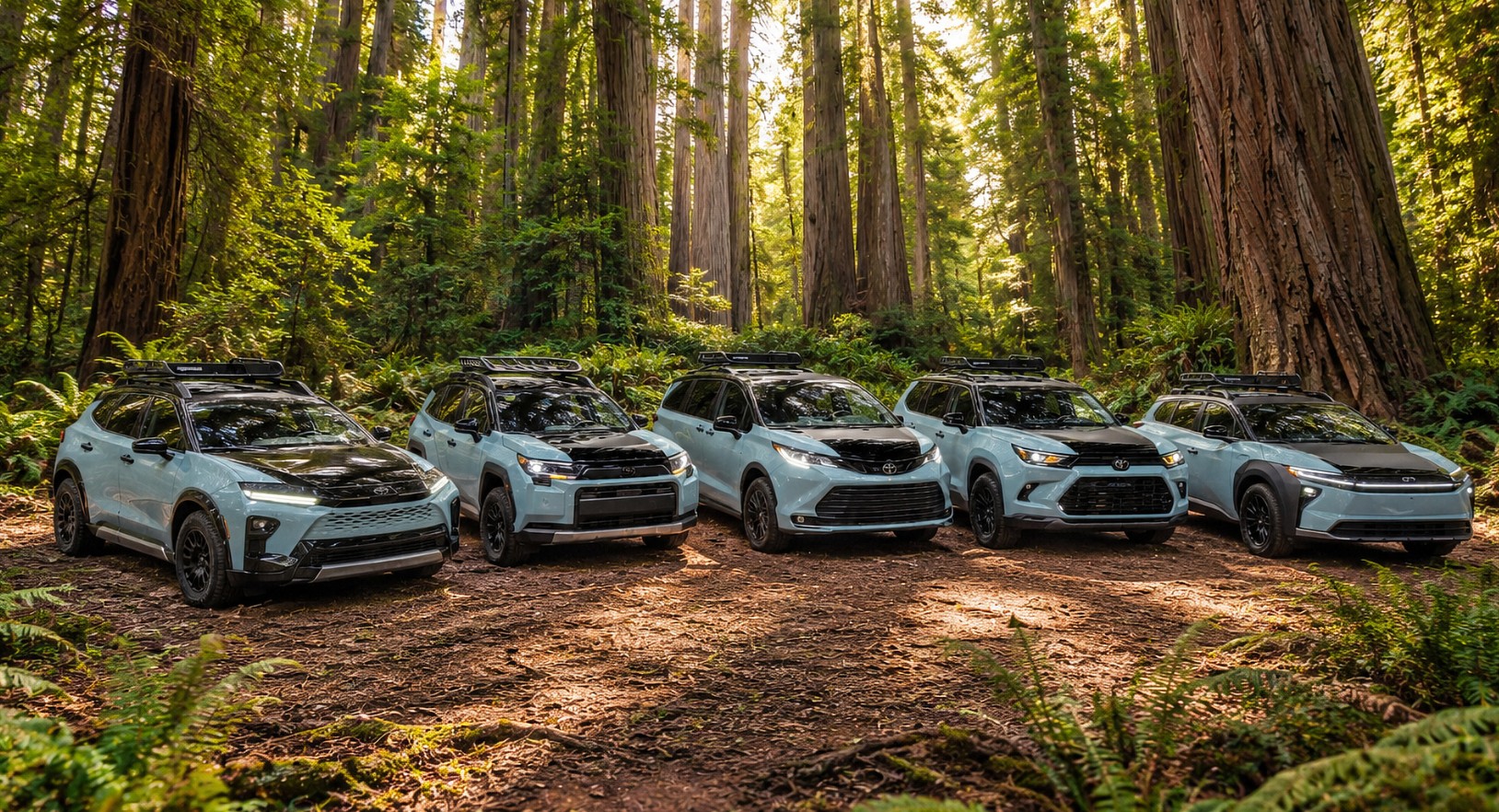
2028 Toyota Woodland SEMA Release Date, Specs, Interior – The 2028 Toyota Woodland SEMA story points toward an adventurous direction for Toyota’s family-focused vehicles, combining rugged styling, electrified powertrains, and practical equipment designed for weekends away from the city. Toyota’s Woodland concepts made a major appearance at the 2026 SEMA Show, where the company presented modified versions of the RAV4, Grand Highlander, Sienna, bZ, and Crown Signia. These builds introduced a shared outdoor-inspired design language with lifted suspensions, all-terrain tires, roof-mounted cargo equipment, and distinctive Horizon Blue paint. However, Toyota has not announced a production vehicle officially named the 2028 Toyota Woodland SEMA. The 2028 model-year angle should therefore be understood as a look at how the ideas displayed at SEMA could influence future Woodland editions, accessories, and adventure-oriented Toyota vehicles. 2028 Toyota Woodland SEMA Release Date
2028 Toyota Woodland SEMA Redesign and Update Plan
Exterior & Interior
Toyota’s Woodland concept family offers a different interpretation of the modern adventure vehicle. Instead of limiting off-road-inspired equipment to traditional SUVs and pickup trucks, the company applied the Woodland theme to a wider selection of vehicles, including a minivan and a battery-electric crossover. The five concepts displayed at SEMA 2026 were based on the RAV4 Plug-in Hybrid, Grand Highlander, Sienna, bZ, and Crown Signia. Each vehicle retained the basic identity of its production counterpart while receiving a more rugged appearance and equipment intended to support outdoor activities. This approach suggests that Toyota sees adventure styling as something that can appeal to families, commuters, and electric-vehicle owners, not only dedicated off-road enthusiasts.
The 2026 SEMA presentation is the confirmed starting point for any discussion of a possible 2028 Toyota Woodland direction. Toyota’s CALTY Design Research team helped establish a consistent visual identity across the five concepts, giving vehicles of different sizes and powertrain types a recognizable family appearance. Their shared design features included lift kits, large over-fenders, satin-black wheels, all-terrain tires, roof racks, and crossbars. The concepts also wore Horizon Blue paint with contrasting dark sections. These details created a clear connection between the vehicles without requiring them to share the same platform, engine, or driving characteristics. For 2028, Toyota could develop this visual language further, although no specific redesign program has been announced.
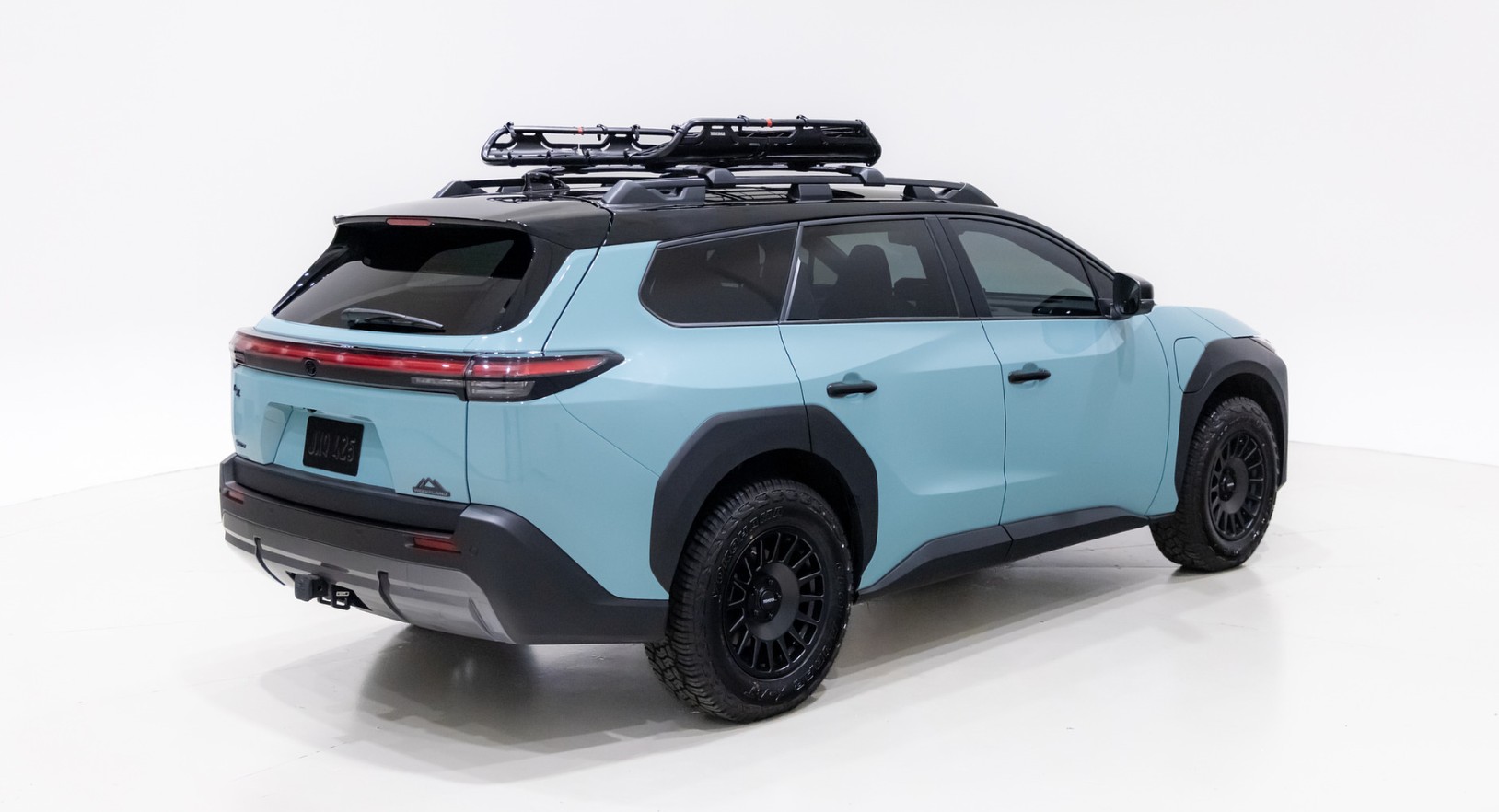
A future Woodland package could focus on making useful outdoor equipment more accessible to customers who do not want to purchase a larger, more expensive off-road vehicle. A modest suspension lift, stronger-looking wheel-arch protection, all-terrain tires, and practical cargo accessories can change the character of a crossover without requiring a completely different vehicle architecture. Toyota could also explore factory-approved accessories that are easier to maintain and better integrated with existing safety systems than some aftermarket modifications. That possibility is especially relevant because the SEMA concepts are special project prototypes, not confirmed production packages. Toyota has not stated that the exact components shown will be sold through dealerships or offered on a 2028 model.
The most interesting part of the Woodland concept strategy is its flexibility. A compact crossover can be prepared for camping trips, a large three-row SUV can carry a family and its equipment, a minivan can support outdoor travel with plenty of interior space, and an electric vehicle can demonstrate that adventure-oriented design does not require a gasoline engine. This broad approach gives Toyota several ways to expand the Woodland identity without creating a single vehicle that must satisfy every customer. If the company continues developing the concept after SEMA 2026, a 2028-era Woodland lineup could include different levels of rugged styling and equipment depending on the vehicle. At present, however, that remains a possibility rather than a confirmed product plan.
The exterior design is the strongest and most recognizable part of the Toyota Woodland SEMA concepts. Horizon Blue paint gives the vehicles a distinctive appearance, drawing inspiration from Toyota colors used during the 1960s on models such as the Stout, Crown, and Corona. Contrasting dark sections on the roof and hood add visual depth, while the satin-black wheels and large over-fenders reinforce the outdoor theme. The color combination is more than a simple cosmetic change: it gives five very different vehicles a shared identity. If Toyota introduces future Woodland packages around the 2028 model year, this coordinated approach could become an important part of the brand’s adventure-oriented styling.
The lifted stance is another major feature. Each concept uses a lift kit to create a taller, more purposeful appearance, while the all-terrain tires provide a visual indication of its intended use. Large over-fenders add protection-inspired styling around the wheel openings, and satin-black wheels create a contrast with the blue bodywork. Roof racks and crossbars provide additional space for carrying outdoor equipment, luggage, and recreational accessories. These modifications make the concepts look more prepared for a trailhead or campsite, but Toyota has not published detailed measurements for lift height, ground clearance, tire dimensions, or approach and departure angles. It would therefore be inaccurate to claim that the concepts have a specific increase in off-road capability.
A production-oriented Woodland design could place greater emphasis on useful details than on aggressive styling alone. Buyers may appreciate roof systems that support properly rated cargo accessories, durable lower-body protection, easy-to-clean wheel designs, and practical mounting points for outdoor equipment. Toyota could also offer optional lighting, mudguards, protective mats, and cargo organizers as part of a coordinated accessory range. The challenge would be to ensure that these additions work with the vehicle’s original engineering. Changes to ride height, tire size, and wheel offset can affect handling, braking, steering, noise, and driver-assistance sensors. A factory-developed package could help address those considerations, provided Toyota validates the equipment for each specific model.
The interior direction is less clearly defined because Toyota’s SEMA announcement focused mainly on the shared exterior theme and outdoor-ready equipment. No complete cabin redesign or detailed interior specification was released for the five Woodland concepts. A future production package could nevertheless build on the existing cabins by adding durable floor protection, washable cargo surfaces, Woodland-branded accessories, extra storage solutions, and convenient equipment organization. The larger Grand Highlander and Sienna could be especially useful for families who need to carry passengers alongside camping supplies, while the RAV4 and Crown Signia could appeal to smaller households. The bZ could offer a different experience for drivers who want an electric vehicle with practical cargo flexibility. Any 2028 interior upgrades remain unconfirmed. 2028 Toyota Woodland SEMA Release Date
2028 Toyota Woodland SEMA Specs
Engine & Performance
One of the defining aspects of the Woodland SEMA lineup is that it does not depend on a single powertrain. Toyota selected vehicles that represent different forms of electrification, including hybrid, plug-in hybrid, and battery-electric technology. The RAV4 Woodland Plug-in Hybrid Concept brings a rechargeable hybrid approach to the adventure theme, while the Grand Highlander Woodland Concept and Crown Signia Woodland Concept represent hybrid-oriented family and crossover applications. The bZ Woodland Concept extends the same styling direction to a fully electric vehicle. Toyota’s announcement also identifies the Sienna Woodland Concept as part of the five-vehicle group. However, the company did not publish a complete technical specification sheet for each concept.
The RAV4 Woodland Plug-in Hybrid is particularly relevant because plug-in hybrid technology can combine electric driving for shorter journeys with a gasoline engine for longer trips. That combination can be attractive to owners who commute during the week but travel farther on weekends. A future Woodland version could retain the benefits of electrification while adding practical equipment for outdoor use. The Grand Highlander, meanwhile, has a larger family-oriented format, making its hybrid powertrain and interior capacity relevant to customers who need to transport more people and luggage. The Crown Signia provides a more premium crossover interpretation, while the bZ demonstrates how a battery-electric vehicle could adopt the same outdoor-inspired visual identity. Exact output and drivetrain details for the SEMA builds have not been released.
Performance on uneven surfaces depends on much more than a vehicle’s appearance. Ground clearance, tire construction, suspension travel, traction management, underbody protection, and drivetrain configuration all influence how confidently a vehicle can handle rough roads. The Woodland concepts’ lift kits and all-terrain tires suggest an interest in improving suitability for gravel roads, campsite access, and other light-duty outdoor routes. They do not automatically make these vehicles equivalent to dedicated off-road models such as the 4Runner or Land Cruiser. Toyota has not supplied independent testing results or technical figures demonstrating the concepts’ ability to tackle difficult terrain. Their role is better understood as an exploration of practical adventure styling and modest capability-focused modifications.
2028 Toyota Woodland SEMA Fuel Economy
Fuel economy will vary considerably because the Woodland name covers vehicles with different sizes and powertrains. A plug-in hybrid can use stored electricity for some journeys, but its efficiency depends on charging frequency, driving conditions, temperature, and how often the gasoline engine operates. A conventional hybrid relies on its engine and electric motors working together, while a battery-electric model uses no gasoline during operation. Added weight, larger tires, increased aerodynamic drag, and changes to ride height can also affect energy consumption. Toyota has not released official fuel-economy figures for the SEMA Woodland concepts, so no single MPG or electric-range estimate can accurately describe the entire lineup. Any future production version would need its own certified figures.
2028 Toyota Woodland SEMA Safety Features
Safety remains essential when a vehicle is modified for outdoor use. Toyota’s production vehicles already offer a range of active safety and driver-assistance technologies, but the exact equipment differs by model, grade, and market. Depending on the vehicle, features may include automatic emergency braking with pedestrian detection, lane-departure assistance, adaptive cruise control, blind-spot monitoring, rear cross-traffic alert, and parking assistance. A future Woodland package would need to preserve the correct operation of these systems. Larger tires, altered suspension geometry, added accessories, and changes to vehicle height can affect sensor positioning or calibration. A factory-engineered package would be preferable to an unvalidated combination of aftermarket parts, particularly for customers who use their vehicles every day.
The SEMA concepts also highlight the importance of matching equipment to the vehicle’s intended role. Roof racks and crossbars can increase carrying capacity, but owners must observe the vehicle’s roof-load limits and the accessory manufacturer’s instructions. All-terrain tires may provide a more suitable tread pattern for loose surfaces, but they can also change road noise, wet-weather behavior, rolling resistance, and braking characteristics. A suspension lift may improve clearance, but it can influence handling and stability if it is not properly engineered. Toyota specifically warns that the displayed vehicles use special project modifications and accessories that may not be available from Toyota, may affect warranty coverage and performance, could compromise safety, and may not be street legal.
Rather than treating Woodland as one fixed trim level, Toyota could eventually use the name as a broader equipment identity across several vehicle categories. A compact crossover package could prioritize roof storage, protective exterior trim, and all-terrain tires. A three-row SUV package could focus on family travel, cargo organization, and additional utility equipment. A minivan could emphasize interior flexibility and carrying capacity, while an electric crossover could combine distinctive styling with accessories suited to recreational use. These are possible directions suggested by the concept family, not confirmed 2028 trim configurations. Toyota has not published a Woodland SEMA order guide, production option list, or final package specifications.
The existing production Woodland editions should also be distinguished from the SEMA prototypes. Toyota has already used the Woodland name on production vehicles, including the 2027 Grand Highlander Hybrid Woodland Edition, which is a factory model with its own published equipment. That production version includes standard all-wheel drive, 18-inch matte-black alloy wheels with all-terrain tires, a half-inch increase in ground clearance, roof rails with crossbars, a tow hitch, and a removable second-row console cooler. The SEMA concepts go further in visual customization and represent a separate prototype project. Buyers should not assume that every accessory or modification shown at the event is included in a production Woodland Edition. 2028 Toyota Woodland SEMA Release Date
2028 Toyota Woodland SEMA Release Date & Price
There is currently no official MSRP for a vehicle called the 2028 Toyota Woodland SEMA because Toyota has not announced it as a production model. The five vehicles displayed at SEMA 2026 are special project prototypes, and the company has not confirmed that the complete builds will be offered for sale. It is therefore not possible to provide a reliable starting price, destination charge, or fully equipped price for a 2028 Woodland SEMA edition. If Toyota eventually introduces related production packages, pricing would likely depend on the base vehicle, powertrain, equipment level, and whether the accessories are installed at the factory or by a dealership.
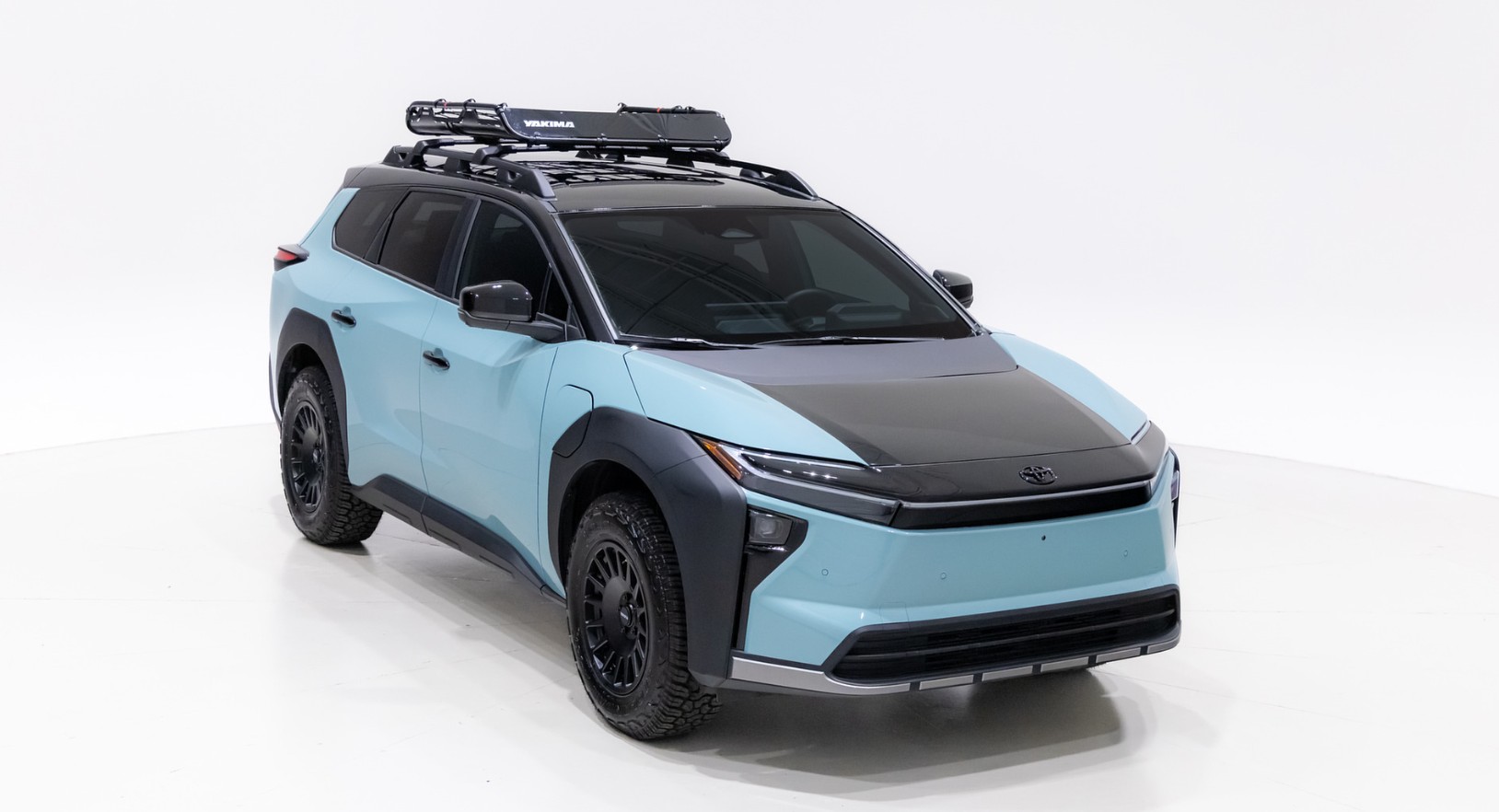
The cost of a future Woodland package would also depend on the extent of its modifications. A package limited to appearance upgrades, protective trim, and cargo accessories would have a different price structure from one that includes a validated suspension lift, all-terrain tires, unique wheels, and additional electrical equipment. Larger vehicles such as the Grand Highlander would naturally occupy a different price category from smaller crossovers, while plug-in hybrid and battery-electric versions would have their own powertrain-related pricing. No official Toyota price range has been announced for a 2028 SEMA-inspired package. Any dollar figure published before a formal announcement should be treated as speculation rather than a confirmed retail price.
The confirmed event associated with the Woodland concept family is the 2026 SEMA Show in Las Vegas, held from November 3 to November 6, 2026. Toyota introduced the concepts ahead of the show and used the event to present its broader approach to vehicle personalization, electrification, and outdoor-oriented design. This event date should not be confused with a 2028 vehicle launch. Toyota has not announced a 2028 Woodland SEMA release date, production schedule, dealership arrival window, or reservation program. If selected ideas move toward production, the company would need to provide separate information about model-year availability and the markets receiving the equipment.
Availability outside the United States is another important consideration. Toyota’s product lineups differ across regions, and the vehicles shown at SEMA do not automatically indicate that the same versions will be sold in every country. Buyers in Indonesia, for example, should wait for information from Toyota Astra Motor before assuming that a particular Woodland concept, powertrain, or accessory package will be offered locally. Vehicle specifications, emissions requirements, taxes, import arrangements, and local customer demand can all influence regional availability. A SEMA prototype may attract international attention, but it does not establish a confirmed Indonesian launch. For now, the most accurate expectation is that the Woodland concepts remain a showcase of Toyota’s design direction rather than a ready-to-order 2028 model range.
Conclusion
The 2028 Toyota Woodland SEMA concept story is best understood as a potential future direction for Toyota’s adventure-inspired vehicles, not as a confirmed production model. The five Woodland concepts revealed for SEMA 2026 demonstrate how Toyota can apply a consistent outdoor identity to a plug-in hybrid crossover, a three-row SUV, a minivan, a battery-electric vehicle, and a premium crossover. Their Horizon Blue paint, lifted stances, all-terrain tires, over-fenders, black wheels, and roof cargo equipment create a distinctive look while showing that outdoor travel can take many forms. Toyota has not confirmed 2028 specifications, prices, trims, fuel-economy ratings, or a release date. The concepts nevertheless provide a clear preview of the possibilities for future Woodland packages and a more versatile approach to everyday adventure.
Note: This blog post’s content is mostly derived from resources that were accessible prior to the product’s actual release. For the most recent information, contact your neighborhood dealership or consult official sources.
Frequently Asked Questions
2028 Toyota Woodland SEMA Release Date, Specs, Interior - The 2028 Toyota Woodland SEMA story points toward an adventurous direction for Toyota’s family-focused vehicles, combining rugged styling, electrified powertrains, and practical equipment designed for weekends away from the city. Toyota’s Woodland concepts made a major appearance at the…
2028 Toyota Woodland SEMA Redesign and Update Plan Exterior & Interior Toyota’s Woodland concept family offers a different interpretation of the modern adventure vehicle. Instead of limiting off-road-inspired equipment to traditional SUVs and pickup trucks, the company applied the Woodland theme to a wider selection of vehicles, including…
The 2026 SEMA presentation is the confirmed starting point for any discussion of a possible 2028 Toyota Woodland direction. Toyota’s CALTY Design Research team helped establish a consistent visual identity across the five concepts, giving vehicles of different sizes and powertrain types a recognizable family appearance. Their shared…
A future Woodland package could focus on making useful outdoor equipment more accessible to customers who do not want to purchase a larger, more expensive off-road vehicle. A modest suspension lift, stronger-looking wheel-arch protection, all-terrain tires, and practical cargo accessories can change the character of a crossover without…
The most interesting part of the Woodland concept strategy is its flexibility. A compact crossover can be prepared for camping trips, a large three-row SUV can carry a family and its equipment, a minivan can support outdoor travel with plenty of interior space, and an electric vehicle can…