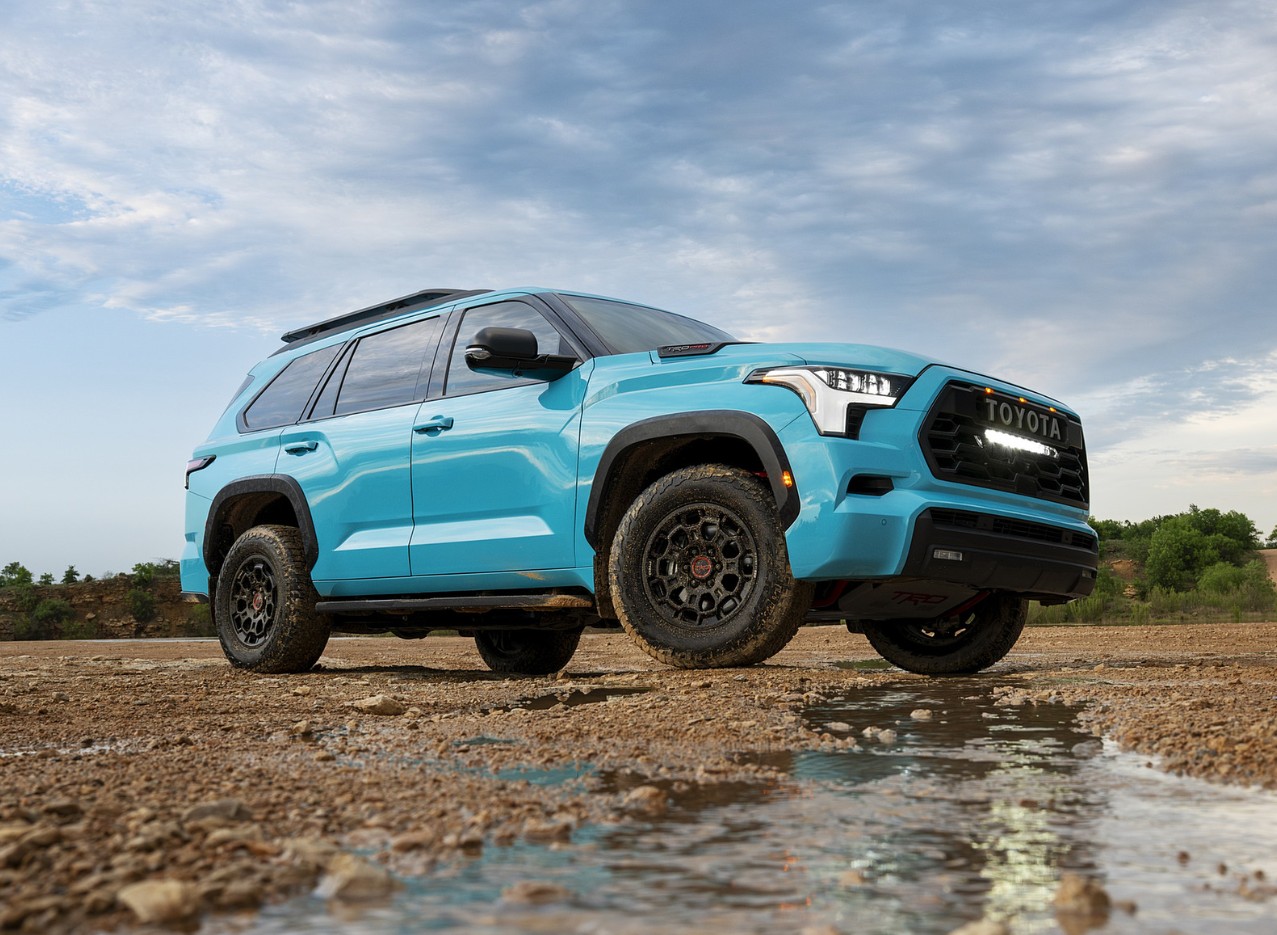
2028 Toyota Sequoia Release Date, Price, Specs – The 2028 Toyota Sequoia is expected to build on Toyota’s reputation for producing powerful, dependable, and family-friendly full-size SUVs. With its i-FORCE MAX hybrid powertrain, spacious three-row cabin, impressive towing capability, and rugged body-on-frame construction, the Sequoia already occupies an important position in the large SUV segment. The upcoming 2028 model year could bring additional technology, improved comfort, updated styling, and refinements designed to keep it competitive against the Chevrolet Tahoe, Ford Expedition, and GMC Yukon. 2028 Toyota Sequoia Release Date
2028 Toyota Sequoia Redesign and Update Plan
Exterior & Interior
Inside the cabin, the 2028 Toyota Sequoia is expected to continue offering a three-row seating configuration designed for families and passengers who need substantial interior flexibility. The dashboard should retain a horizontal layout, a raised center console, and clearly organized controls that make everyday operation straightforward. Toyota has an opportunity to improve the perceived quality of the cabin through more attractive surface materials, refined stitching, softer dashboard finishes, and additional storage solutions. These improvements would be particularly valuable in a vehicle positioned against premium full-size SUVs. The overall interior experience should combine practical truck-inspired functionality with the comfort and convenience expected from an expensive family vehicle.
The infotainment system is another area where Toyota could deliver meaningful improvements. The 2027 Sequoia introduces a standard 14-inch Toyota Audio Multimedia touchscreen, replacing the smaller display previously offered on lower configurations. This larger interface provides a more substantial central control point for navigation, entertainment, smartphone connectivity, and vehicle settings. The 2028 model could retain this screen while receiving software refinements, faster processing, improved voice recognition, and additional connected services. Wireless Apple CarPlay and Android Auto, USB charging connections, Bluetooth connectivity, and available premium audio equipment should remain important features. A larger digital instrument display could also help drivers monitor hybrid operation, navigation information, fuel consumption, and towing-related data.
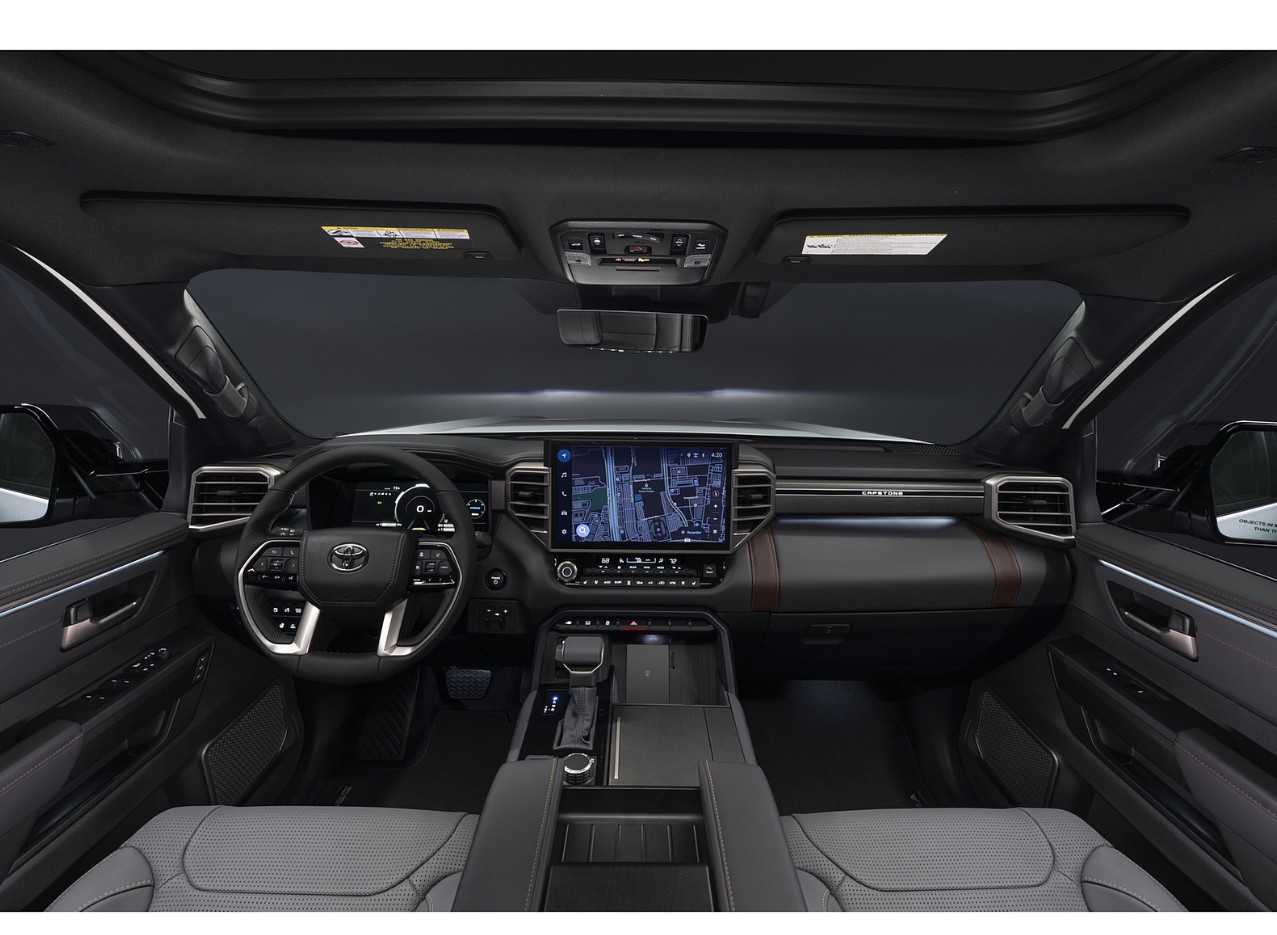
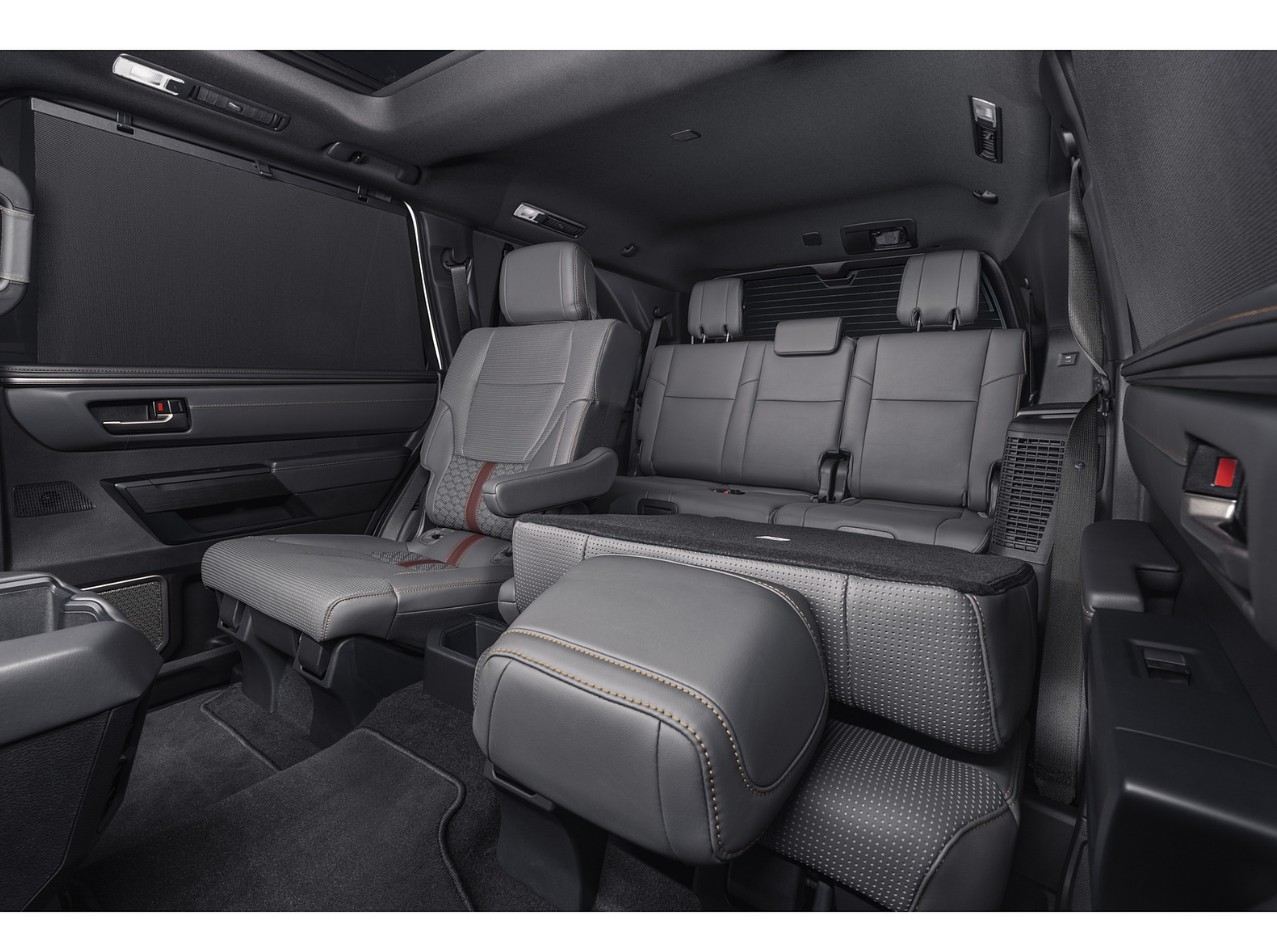
Passenger comfort will remain a major consideration because the Sequoia is expected to serve as a family transportation vehicle as much as an adventure-oriented SUV. The front seats should provide generous adjustment, supportive cushioning, and available heating and ventilation on higher configurations. Depending on trim level, buyers could also expect leather-trimmed upholstery, memory settings, heated rear seating, and a heated steering wheel. The second row should continue offering either a bench arrangement or captain’s chairs, depending on configuration. This flexibility allows customers to prioritize seating capacity or easier access to the third row. The large cabin should also provide multiple cupholders, convenient storage compartments, and charging connections for passengers.
Cargo versatility is another area where the 2028 Sequoia needs to remain competitive. The third-row seating system is designed to accommodate passengers while allowing the rear cargo area to be adjusted according to different transportation requirements. However, the current Sequoia’s rear suspension arrangement affects cargo-floor flexibility, so Toyota would benefit from improving storage organization and usable luggage space. A more convenient folding mechanism, better underfloor storage, and additional cargo accessories could make the cabin more practical. Families carrying several passengers will appreciate flexible seating arrangements, while outdoor enthusiasts will value the ability to transport bicycles, camping equipment, luggage, and other large items without compromising everyday usability.
The 2028 Toyota Sequoia is expected to continue the bold exterior direction established by the current third-generation model. Introduced for the 2023 model year, this generation replaced the previous V8-powered architecture with a more modern body-on-frame platform and a twin-turbocharged hybrid V6 powertrain. Its large proportions, upright windshield, wide front grille, and muscular bodywork give it a distinctive appearance among full-size SUVs. Following the styling revisions announced for 2027, a completely new exterior generation for 2028 seems less likely than a continuation of the existing design with selective refinements. Toyota could concentrate on improving the visual details without changing the SUV’s recognizable identity.
At the front, the Sequoia is expected to retain its prominent grille, sculpted hood, and modern LED lighting signature. The 2027 styling direction introduces a sharper and more assertive appearance, creating a stronger connection with Toyota’s latest truck lineup. For 2028, additional grille finishes, revised decorative elements, and updated lighting details would be reasonable possibilities. The front bumper should continue to emphasize the vehicle’s rugged proportions while incorporating functional openings for cooling and airflow. Higher trim levels could receive more distinctive finishes, while off-road-oriented versions may use darker exterior accents and protective components to reinforce their adventurous character.
The side profile should remain one of the Sequoia’s most recognizable features. Its long wheelbase, substantial doors, pronounced wheel arches, and high ground clearance communicate strength without sacrificing the premium appearance expected from a modern family SUV. Toyota is likely to retain large alloy wheels across the lineup, with different designs separating the more affordable SR5 from the luxury-focused Platinum and Capstone. Off-road configurations could continue using smaller wheels paired with taller all-terrain tires to provide additional sidewall protection. Practical equipment such as roof rails, running boards, power-folding mirrors, and available towing hardware should remain important considerations for buyers who regularly travel with passengers and outdoor equipment.
At the rear, the 2028 Sequoia should continue with a wide tailgate, vertically arranged lighting elements, and a substantial bumper designed to complement its truck-based construction. Toyota could introduce revised LED graphics, updated trim-specific badging, and additional exterior color combinations to make the SUV look fresher. A power-operated rear liftgate would remain particularly useful for families loading groceries, luggage, camping equipment, and sports gear. The rear design must also accommodate the practical requirements of a large three-row vehicle, including convenient access to the cargo compartment and adequate visibility when reversing. Overall, the expected exterior strategy favors evolutionary improvements rather than an unnecessary redesign.
The next-generation appeal of the Sequoia will likely come from a careful balance between traditional SUV toughness and modern electrified performance. Rather than abandoning its truck-based foundation, Toyota is expected to continue developing the model around its proven platform while improving the details that matter most to buyers, including passenger comfort, multimedia technology, driver assistance, and long-distance driving refinement. Although Toyota has not officially confirmed the complete 2028 specification sheet, the updates introduced for 2027 provide a useful indication of the direction the SUV could take.
For buyers considering a premium three-row SUV, the 2028 Toyota Sequoia could become an attractive option because it combines substantial engine output with the flexibility of a hybrid system. Its large cabin, available four-wheel drive, sophisticated suspension equipment, and substantial towing capacity make it suitable for family transportation, recreational travel, and demanding outdoor activities. The following preview examines the expected design, equipment, performance, efficiency, trim selection, pricing, and arrival timeline while distinguishing established Toyota specifications from projections for the 2028 model year. 2028 Toyota Sequoia Release Date
2028 Toyota Sequoia Specs
Engine & Performance
The most important mechanical feature expected to continue in the 2028 Toyota Sequoia is the i-FORCE MAX twin-turbocharged 3.4-liter V6 hybrid powertrain. In its established configuration, this system produces approximately 437 horsepower and 583 lb-ft of torque. Instead of relying exclusively on engine displacement to generate pulling power, Toyota combines turbocharging with an electric motor integrated into the transmission system. This arrangement provides strong low-speed torque, responsive acceleration, and the ability to manage substantial vehicle weight. For a full-size SUV, the hybrid setup offers an interesting combination of traditional towing capability and modern electrified assistance. A major mechanical redesign has not been confirmed for 2028, so these established output figures provide the most reasonable reference point.
Power delivery is handled by a 10-speed electronically controlled automatic transmission designed to manage both everyday driving and demanding operating conditions. The numerous gear ratios allow the Sequoia to maintain useful engine performance across a wide range of speeds. Rear-wheel drive is available on selected configurations, while four-wheel drive provides additional traction for slippery roads, loose surfaces, and challenging terrain. Depending on equipment, the SUV can also benefit from a two-speed transfer case, electronically controlled traction systems, and specialized off-road driving modes. Toyota is likely to preserve this mechanical foundation because it already delivers the combination of strength and versatility expected from a body-on-frame vehicle.
Towing capability is one of the Sequoia’s strongest selling points. The established maximum rating reaches up to 9,500 pounds when properly equipped, although the actual capacity depends on configuration and equipment. This makes the SUV suitable for pulling many recreational trailers, boats, and camping caravans. The available towing equipment can include trailer-oriented driving assistance, integrated hitch hardware, and systems designed to make maneuvering with a trailer easier. For 2028, Toyota could further refine towing technology through improved camera assistance, enhanced trailer monitoring, and more convenient vehicle information displays. Nevertheless, buyers should always consult the final model-year towing chart because maximum capacity is not necessarily available on every trim or drivetrain.
2028 Toyota Sequoia Fuel Economy
Fuel economy should remain an important part of the 2028 Sequoia’s appeal, although buyers should not expect hybrid technology to turn this large SUV into an exceptionally economical compact vehicle. The 2026 rear-wheel-drive model carries EPA-estimated ratings of approximately 21 mpg in the city, 24 mpg on the highway, and 22 mpg combined. Four-wheel-drive configurations have lower estimated ratings, generally around 19 mpg in the city, 22 mpg on the highway, and 20 mpg combined. These figures provide a useful reference, but official 2028 EPA ratings have not been announced. Real-world consumption will depend on passenger loads, driving habits, road conditions, tire selection, towing requirements, and the amount of time spent in city traffic. Toyota could improve efficiency through software calibration and powertrain optimization, but any numerical improvement remains speculative.
2028 Toyota Sequoia Safety Features
Safety technology should receive continued attention in the 2028 Toyota Sequoia. The 2027 model announcement identifies Toyota Safety Sense 4.0 as standard equipment, providing an indication of the advanced driver-assistance direction for the upcoming model years. Expected equipment includes systems designed to help detect potential frontal collisions, maintain lane positioning, monitor road signs, and support safer highway driving. Adaptive cruise control, automatic emergency braking, lane departure assistance, and proactive driving support should remain important parts of the package, subject to final equipment specifications. Toyota could also continue offering blind-spot monitoring, rear cross-traffic alert, parking assistance, and a panoramic camera system on selected configurations.
Beyond electronic assistance, the Sequoia’s underlying body-on-frame construction provides the structural foundation required for a large SUV. A comprehensive safety package must also account for airbags, seatbelt systems, child-seat mounting points, electronic stability control, and traction management. These features are especially important when transporting several passengers or driving on unfamiliar roads. Available parking sensors and surround-view camera technology can make the vehicle easier to position in tight spaces, while trailer assistance can help drivers manage its considerable dimensions. For the 2028 model, further improvements to sensor coverage, camera resolution, and software responsiveness would be welcome. Final safety ratings and the precise standard equipment list will need to be confirmed after official testing and publication.
2028 Toyota Sequoia Release Date & Price
The official release date for the 2028 Toyota Sequoia has not yet been announced. However, based on Toyota’s established North American product schedules, the SUV could make its public debut or enter production during the second half of 2027, with dealership arrivals potentially beginning in late 2027 or early 2028. This is an expected timeframe rather than a confirmed launch schedule. Toyota may reveal the vehicle’s final specifications, equipment packages, and pricing closer to the start of its production period. Buyers interested in the next model should follow official Toyota announcements before making decisions based on estimated launch dates or unofficial dealer information.
The competitive environment will remain challenging because the full-size SUV category includes several established alternatives. The Chevrolet Tahoe offers substantial passenger and cargo flexibility, while the GMC Yukon targets buyers seeking a more premium interpretation of the traditional large SUV. The Ford Expedition competes with strong towing capability, modern technology, and a spacious interior. Meanwhile, the Jeep Wagoneer provides another option for customers who prioritize cabin luxury and road-trip comfort. The Sequoia differentiates itself through its standard hybrid-oriented powertrain strategy, impressive torque delivery, and Toyota’s reputation for building durable vehicles. Its combination of electrified performance and truck-based engineering gives it a distinct position within this competitive segment.
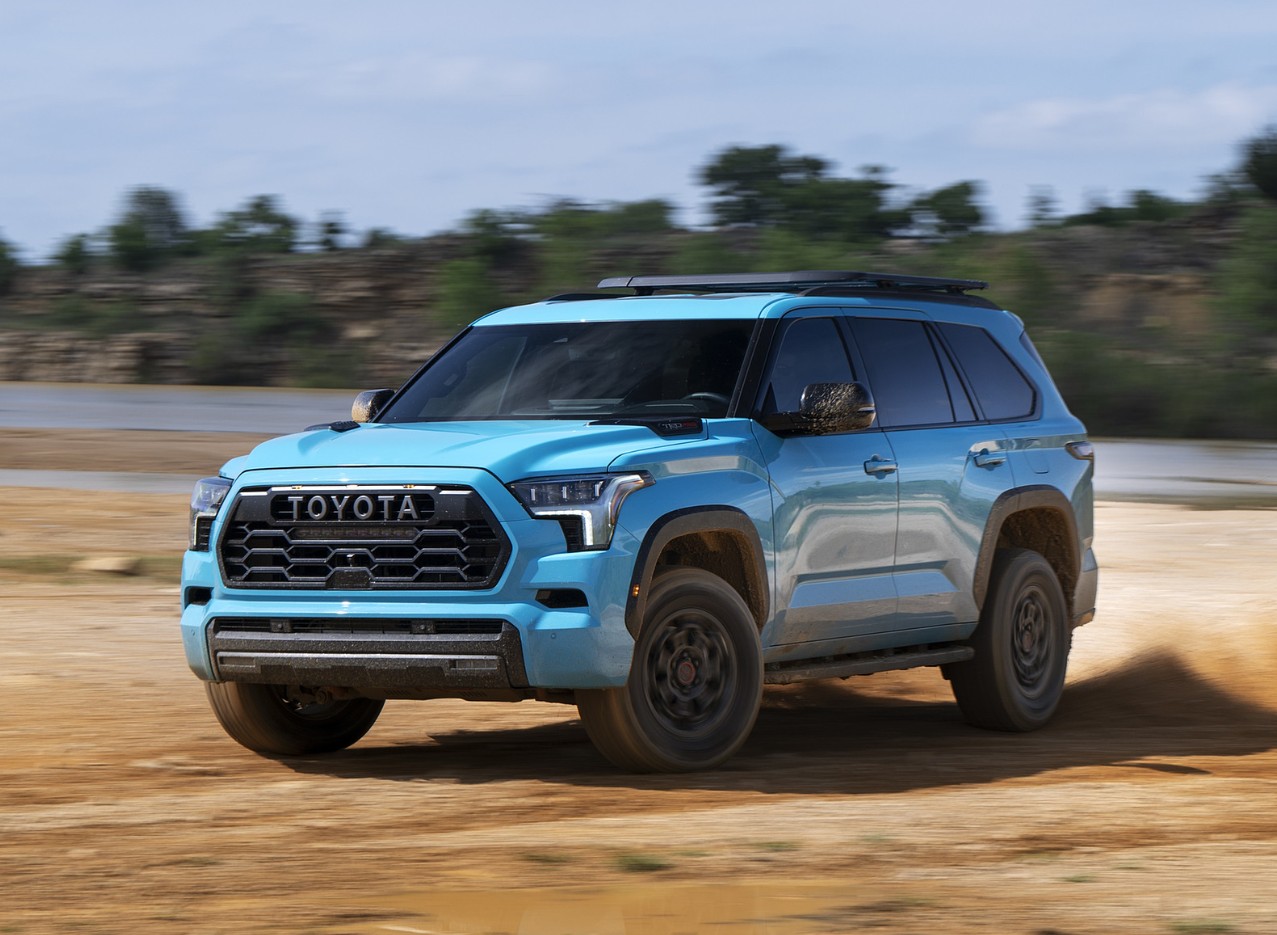
For prospective buyers, choosing the correct configuration will be just as important as deciding whether to purchase the 2028 model. Families who spend most of their time on paved roads may find the SR5 or Limited sufficient for everyday transportation. Customers who regularly travel long distances with several passengers could benefit from the additional comfort features offered by Platinum or Capstone. Drivers who frequently explore remote destinations may prefer the specialized suspension, tires, and protective equipment associated with TRD Pro or Trailhunter. It is also important to consider fuel consumption, parking space, insurance costs, and the vehicle’s overall dimensions. A full-size SUV offers considerable capability, but its size and operating expenses should match the owner’s actual requirements.
The strongest buying argument for the 2028 Sequoia could be its ability to perform several demanding roles without relying on a conventional large-displacement V8 engine. Its hybrid V6 system provides substantial power, while the body-on-frame platform supports towing and more demanding driving conditions. The three-row configuration accommodates family transportation, and the available premium features make extended journeys more comfortable. Nevertheless, buyers should pay attention to third-row accommodation and cargo practicality, especially when comparing the Sequoia with competitors offering longer-wheelbase versions. The final decision should consider passenger comfort, luggage requirements, towing capacity, and the equipment included in each trim rather than focusing exclusively on horsepower or exterior appearance.
Toyota is expected to maintain a broad Sequoia trim lineup for 2028, giving customers several ways to configure the SUV according to their budgets and priorities. The established range includes SR5, Limited, Platinum, 1794 Edition, TRD Pro, and Capstone, with the newer Trailhunter equipment offering an additional direction for adventure-focused buyers. Although Toyota has not confirmed the complete 2028 lineup, these existing configurations provide a reasonable starting point for understanding what could be available. Each version serves a different purpose, ranging from practical family transportation to premium comfort and specialized off-road capability.
The SR5 should remain the entry point into the Sequoia range. However, entry-level does not mean poorly equipped, particularly when considering the SUV’s substantial hybrid powertrain and modern cabin technology. Buyers can expect a useful selection of convenience features, a comprehensive infotainment system, three-row seating, and essential driver-assistance equipment. Its exterior styling should emphasize durability rather than excessive decoration, making it an appealing option for customers who want a capable full-size SUV without paying for every luxury feature. Available packages could add four-wheel drive, additional towing equipment, upgraded interior materials, and off-road enhancements. For families who prioritize practicality and mechanical capability, the SR5 could represent one of the most sensible choices.
The Limited, Platinum, and 1794 Edition should occupy the more comfort-oriented section of the lineup. The Limited is expected to offer a more upscale cabin, improved upholstery, larger wheels, and additional convenience equipment compared with the SR5. The Platinum should appeal to customers seeking a more luxurious experience, potentially offering premium seating materials, advanced audio equipment, panoramic roof functionality, and additional driver-assistance conveniences. Meanwhile, the 1794 Edition is expected to retain its distinctive Western-inspired character, with special exterior details, exclusive interior finishes, and warm decorative materials. These versions allow Toyota to compete for customers who want substantial passenger space and towing strength without moving into an entirely luxury-branded SUV.
The TRD Pro, Trailhunter, and Capstone could provide the most distinctive experiences within the 2028 Sequoia family. The TRD Pro is designed for serious off-road use, with specialized suspension equipment, all-terrain tires, protective components, and distinctive exterior styling. Trailhunter takes a different approach by emphasizing overlanding equipment, including upgraded suspension components and additional protection for extended outdoor adventures. Capstone, on the other hand, focuses on premium appointments, sophisticated exterior finishes, and a more luxurious cabin atmosphere. These configurations should remain attractive to customers with very different expectations, although their final availability and equipment will depend on Toyota’s official 2028 announcement.
Expected pricing will depend on production costs, equipment changes, inflation, and Toyota’s final positioning of the model. For reference, the 2026 Sequoia starts at $65,725 in the United States, while the more extensively equipped configurations carry substantially higher prices. The 2028 model could begin around $68,000 to $70,000 for an entry-level SR5, with the Limited potentially moving into the mid-$70,000 range. Platinum and 1794 Edition versions could approach or exceed $85,000, while specialized TRD Pro, Trailhunter, and Capstone configurations may occupy the upper end of the range. These are editorial estimates rather than confirmed manufacturer prices. Destination charges, optional packages, regional taxes, and dealer pricing could increase the final purchase cost. 2028 Toyota Sequoia Release Date
Conclusion
The 2028 Toyota Sequoia is shaping up to be an appealing prospect for customers seeking a powerful, versatile, and technology-focused full-size SUV. Although its complete redesign plan and model-year specifications remain unconfirmed, the established i-FORCE MAX hybrid system provides a strong foundation for future development. Its combination of 437 horsepower, 583 lb-ft of torque, and up to 9,500 pounds of towing capacity already gives the current model substantial capability.
The expected continuation of Toyota’s updated multimedia technology, advanced safety equipment, and specialized trim options could make the 2028 version even more attractive. The SR5 and Limited should appeal to practical family buyers, while Platinum, 1794 Edition, and Capstone could satisfy customers looking for additional luxury. TRD Pro and Trailhunter should remain particularly interesting for drivers who want a more adventurous SUV.
With an estimated starting price approaching $68,000 to $70,000 and a possible dealership arrival in late 2027 or early 2028, the next Sequoia could become a strong contender in the premium full-size SUV market. Its ultimate success will depend on how effectively Toyota improves interior practicality, technology, efficiency, and overall refinement while preserving the rugged character that defines the nameplate.
Note: This blog post’s content is mostly derived from resources that were accessible prior to the product’s actual release. For the most recent information, contact your neighborhood dealership or consult official sources.
Frequently Asked Questions
2028 Toyota Sequoia Release Date, Price, Specs - The 2028 Toyota Sequoia is expected to build on Toyota’s reputation for producing powerful, dependable, and family-friendly full-size SUVs. With its i-FORCE MAX hybrid powertrain, spacious three-row cabin, impressive towing capability, and rugged body-on-frame construction, the Sequoia already occupies an…
2028 Toyota Sequoia Redesign and Update Plan Exterior & Interior Inside the cabin, the 2028 Toyota Sequoia is expected to continue offering a three-row seating configuration designed for families and passengers who need substantial interior flexibility. The dashboard should retain a horizontal layout, a raised center console, and…
The infotainment system is another area where Toyota could deliver meaningful improvements. The 2027 Sequoia introduces a standard 14-inch Toyota Audio Multimedia touchscreen, replacing the smaller display previously offered on lower configurations. This larger interface provides a more substantial central control point for navigation, entertainment, smartphone connectivity, and…
Passenger comfort will remain a major consideration because the Sequoia is expected to serve as a family transportation vehicle as much as an adventure-oriented SUV. The front seats should provide generous adjustment, supportive cushioning, and available heating and ventilation on higher configurations. Depending on trim level, buyers could…
Cargo versatility is another area where the 2028 Sequoia needs to remain competitive. The third-row seating system is designed to accommodate passengers while allowing the rear cargo area to be adjusted according to different transportation requirements. However, the current Sequoia's rear suspension arrangement affects cargo-floor flexibility, so Toyota…